Education
May 2023
Retention by Design
Harnessing gamification to make learning stick. Designing an e-learning app that turns study into strategy.

Harnessing gamification to make learning stick. Designing an e-learning app that turns study into strategy.
This side project brought together design system expertise and a focused approach to gamification. grid set out to keep learners returning for short, impactful lessons. The work blended motivational design with a consistent component library so that authors could produce quality content at speed.
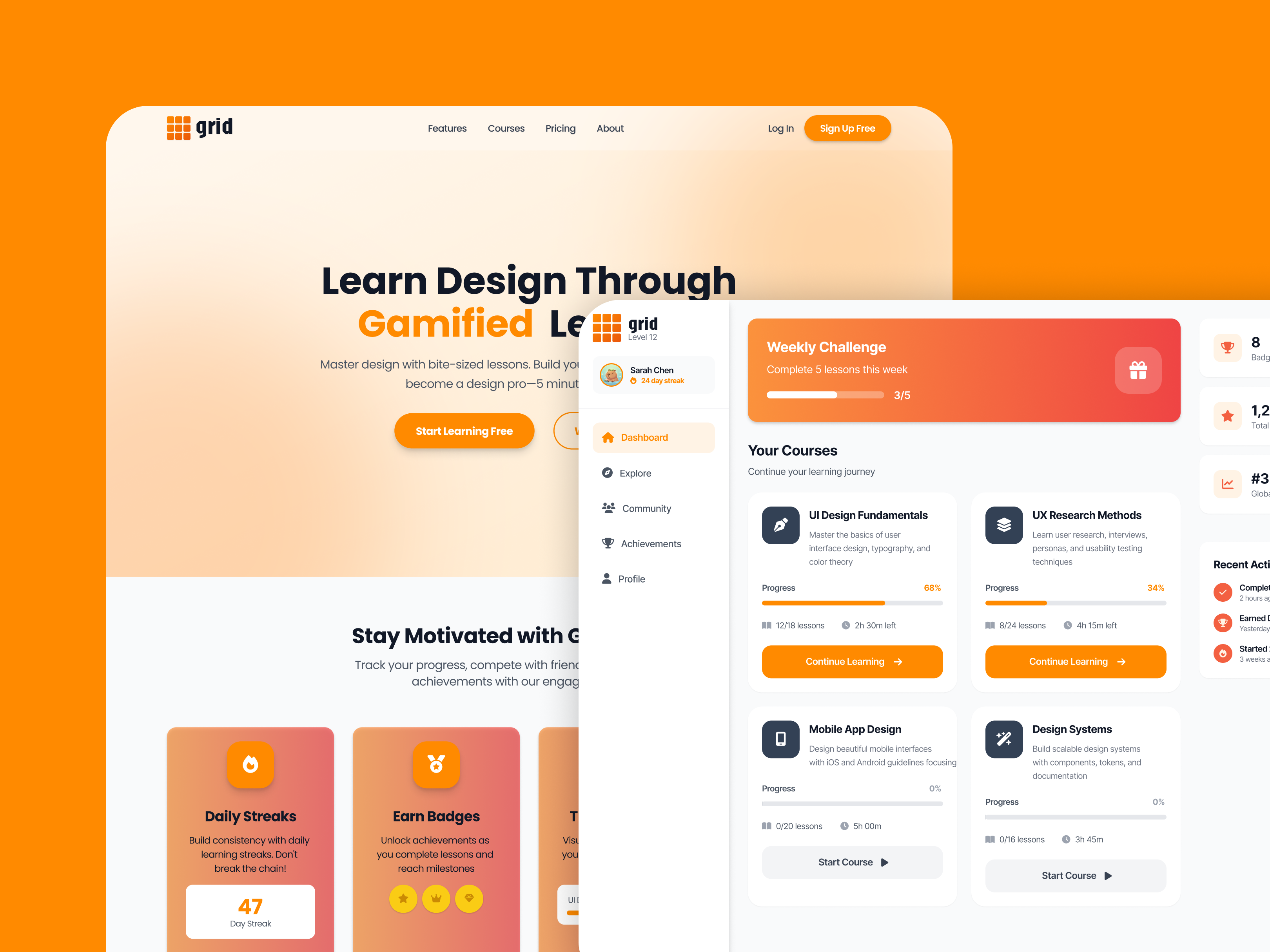
grid offered short modules, although retention remained low and interface patterns were inconsistent. Lessons lacked a coherent visual language and strong motivational hooks. We needed to anchor behavior in completion, not just in logins, and to make content assembly predictable for authors.
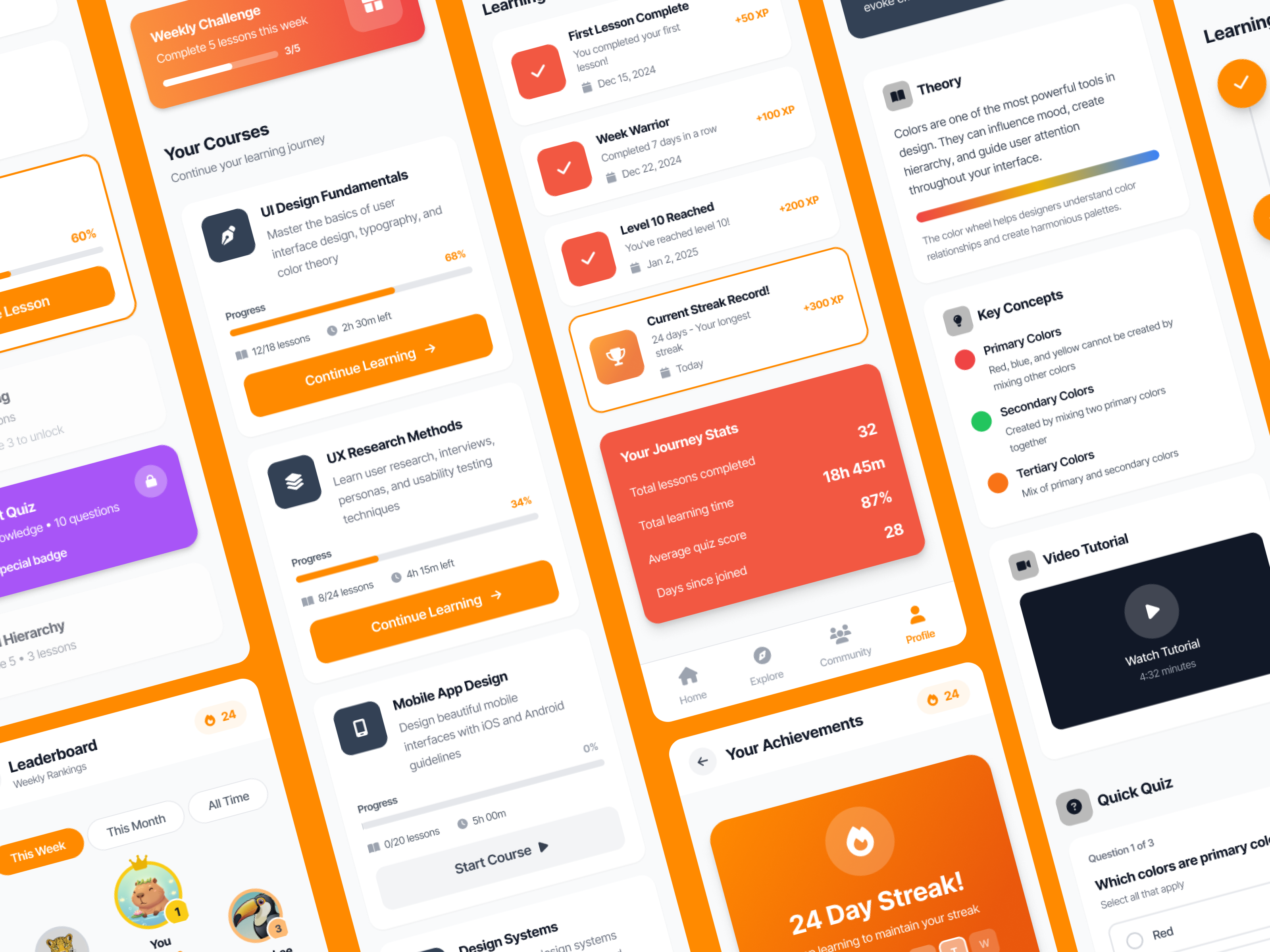
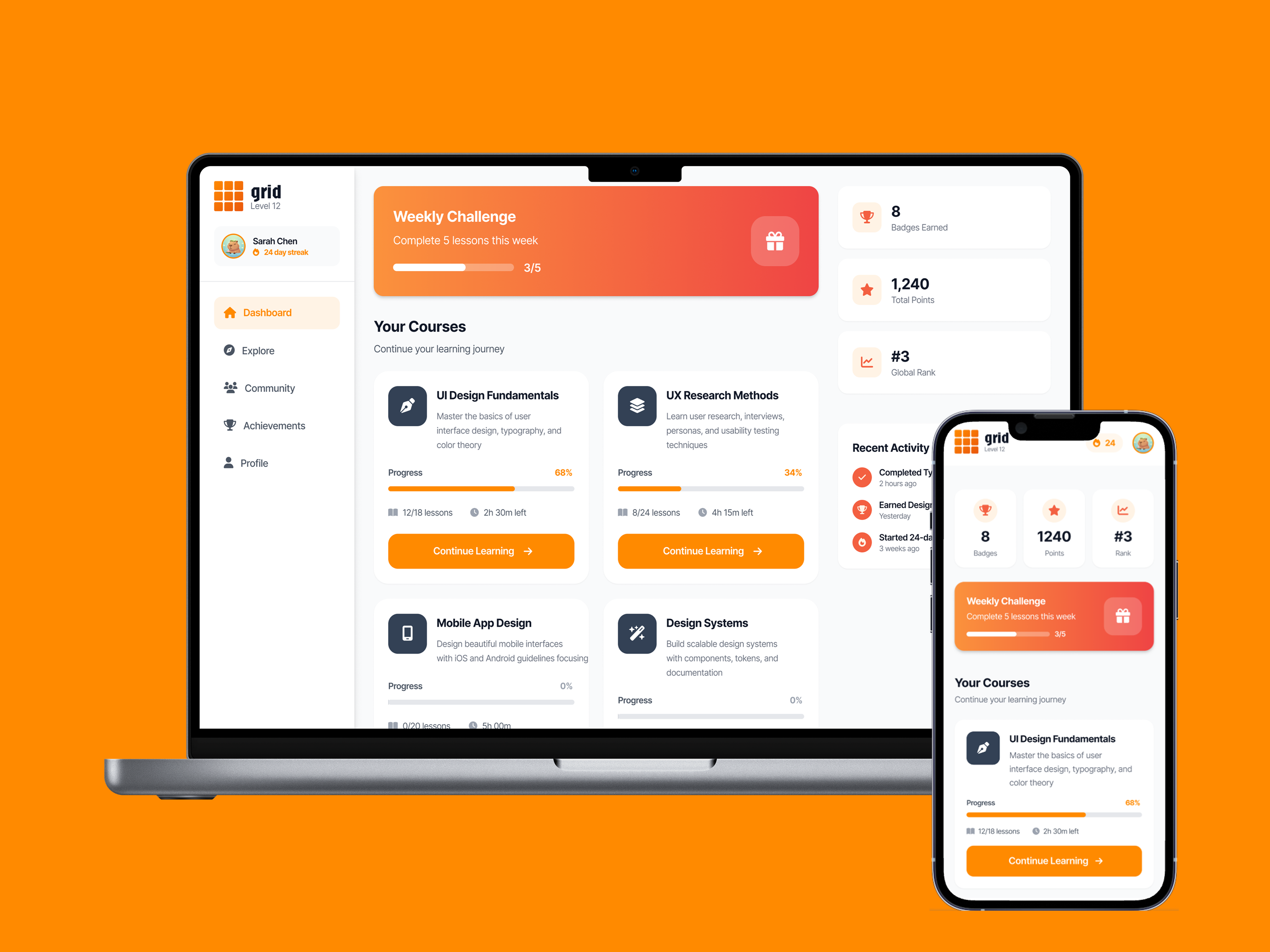
I researched learner motivations through surveys and interviews and then designed a set of mechanics that included badges, streaks, progress tracking, and weekly challenges. I built a component based design system for course templates with clear rules for typography and spacing and tested flows using the SUS and SEQ measures, iterating on the basis of qualitative and quantitative findings.
One challenge: Adding streak mechanics initially increased log-ins but not lesson completion. After testing, we linked streaks to lesson finished instead of app opened. Completion rates then improved.
Engagement rose by 27% · SUS and SEQ scores showed strong usability and satisfaction · New content could be rolled out 40% faster using the design system
I produced wireframes and visual mocks that embedded gamification patterns, created reusable components for quizzes, badges, progress panels, and lesson cards, and wrote a content authoring guide that allowed non designers to assemble consistent lessons. I also added a feedback loop inside the lesson that suggested the next activity based on performance so that progress always felt within reach.
Engagement rose by twenty seven percent when measured by weekly active learners, median session length increased from six minutes to nine, day seven retention moved from nineteen to twenty eight percent, and day thirty retention improved from eight to twelve percent. New content shipped forty percent faster because authors used the standardized templates. SUS increased from seventy one to eighty one and SEQ scores reflected easier task completion. A learner wrote that the weekly challenge with a clear finish line felt like a small game for the first time in their experience with online courses. The feature was simple, a checklist with a celebratory end state, and it consistently nudged people to complete one more lesson before leaving.
Across these cases the pattern is consistent. I make complex systems easier to build, easier to use, andeasier to evolve. I combine rigorous research, clear metrics, and practical delivery. I tell the story inhuman terms because adoption depends on culture as much as on technology.